Physical Address
304 North Cardinal St.
Dorchester Center, MA 02124
Physical Address
304 North Cardinal St.
Dorchester Center, MA 02124
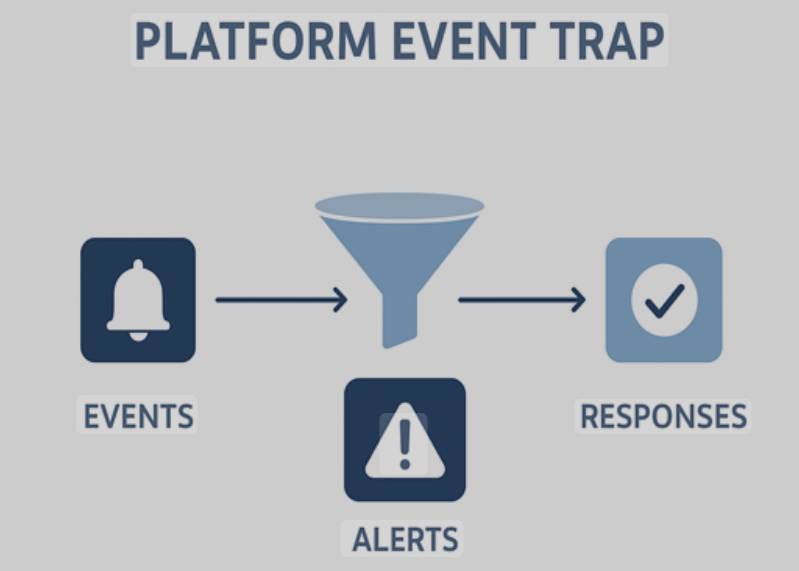
Platform event trap might sound like something out of a technical playbook, but in 2025, it’s an increasingly important concept in software, cloud services, and system management. If you’ve ever wondered how businesses monitor, capture, and respond to real-time events within complex digital platforms, the platform event trap is at the heart of that process.
In this guide, we’ll explore what a platform event trap is, why it matters, how it works, and the benefits and challenges it brings to modern systems.
A platform event trap is essentially a mechanism used to capture and monitor specific events that occur within a digital system or software platform. Think of it as a “digital tripwire” that alerts administrators or applications when something important happens—whether it’s a system error, a security breach, or a performance threshold being reached.
In today’s fast-paced digital world, organizations can’t afford delays when problems arise. A platform event trap ensures that events are not only detected but acted upon quickly.
Here’s a simplified breakdown of the process:
This makes it a cornerstone of event-driven architecture in cloud and enterprise systems.
Like any technology, a platform event trap comes with challenges:
Some real-world examples of platform event traps include:
As businesses continue shifting to cloud and AI-driven systems, platform event traps will become smarter and more adaptive. Expect to see:
1. Is a platform event trap only for IT teams?
No, it can be used in business platforms like Salesforce, cloud services, and even marketing automation.
2. Can platform event traps prevent cyberattacks?
They can’t prevent them entirely, but they help detect and respond faster.
3. Are they difficult to implement?
It depends on the system. Some platforms have built-in event trap frameworks, while others require custom setup.
A platform event trap is more than just a monitoring tool—it’s a safeguard for modern digital operations. By detecting, alerting, and triggering real-time responses, it helps businesses stay secure, efficient, and proactive in an ever-changing digital environment.
As we move further into 2025, expect platform event traps to evolve alongside AI, automation, and event-driven architecture. For businesses that want to stay ahead, understanding and implementing this tool will be essential.